













That first 90-degree ride of the season has a way of humbling you. The effort that felt comfortable last week suddenly feels punishing, your bottles empty faster than expected, and you find yourself watching the temperature on your bike computer more than your power numbers.
Heat changes everything about how your body performs on the bike. It shifts how you fuel, what you wear, when you ride, and how hard you can push. The good news is that none of this is unmanageable—it just requires preparation.
This guide covers what heat actually does to your body, how to build a summer cycling kit that works with your body's cooling system instead of against it, how to hydrate and fuel when temperatures climb, and how to recognize when conditions have crossed from challenging to dangerous.
What heat actually does to your body on the bike
Cycling in hot weather puts your cardiovascular system under double duty. Your heart pumps blood to cool your skin while also powering your legs, which is why the same effort that feels comfortable at 70°F can feel punishing at 90°F. Sweat rates climb, and without proper hydration and pacing, your power output drops as your core temperature rises.
How your body regulates temperature while riding
When you pedal, your muscles generate heat. Your body responds by increasing blood flow to the skin and producing sweat, which evaporates to cool you down. On the bike, airflow helps this process along, but when ambient temperature and humidity are high, the system gets overwhelmed.
Your heart rate drifts upward even at the same power output. This is normal physiology, not a sign of poor fitness. Your body is simply working harder to manage two competing demands: cooling and performance.
Why humidity makes heat worse
Humidity reduces the effectiveness of sweat evaporation. A 90°F day at 30% humidity feels fundamentally different from 85°F at 80% humidity because your sweat can't evaporate efficiently when the air is already saturated with moisture.
Riders in the Southeast, Gulf Coast, and mid-Atlantic states know this well. The heat index, which accounts for both temperature and humidity, is often a better gauge than temperature alone when deciding whether to ride, how far, and how hard.
Heat exhaustion vs. heatstroke: know the signs
Heat-related illness doesn’t announce itself with a single dramatic moment. It builds gradually, and experienced riders are just as vulnerable as newer ones—sometimes more so, because years of riding can teach you to push through discomfort that your body is using as a warning.
Heat cramps come first. Muscle spasms in your legs, abdomen, or arms during or after a hard effort in the heat usually mean you’re low on sodium and fluids. The fix is straightforward: stop, seek shade, drink an electrolyte drink, and let the cramps pass before continuing.
Heat exhaustion is the next stage. Heavy sweating, clammy skin, nausea, dizziness, headache, and a general sense that something is off—these are your body telling you it’s losing the battle against rising core temperature. If you notice any combination of these symptoms, stop riding. Get out of the sun, pour water over your head and neck, and drink. Do not try to ride through it.
Heatstroke is a medical emergency. The hallmarks are confusion or altered mental state, hot and dry skin where sweating has stopped, rapid pulse, and, in severe cases, loss of consciousness. If you or a riding partner shows these signs, call emergency services immediately. Move to shade, cool the body with whatever water is available, and do not attempt to continue the ride.
The line between heat exhaustion and heatstroke is thinner than most riders realize. Know the signs, check on your riding partners, and treat early symptoms seriously. Cutting a ride short is always the right call when your body is telling you to stop.
How hot is too hot to ride
There's no single magic number. The right answer depends on temperature, humidity, wind, sun exposure, ride duration, and your own fitness and heat tolerance. But a general framework helps.
|
Temperature Range |
Precaution Level |
Ride Adjustment |
|
75–85°F |
Moderate |
Hydrate more than usual, wear sun protection, lighter kit. Most riders handle this range well with preparation. |
|
85–95°F |
High |
Shorten ride or reduce intensity. Hydrate aggressively. Take shade breaks. Avoid midday hours. |
|
95°F+ |
Extreme |
Early morning or evening only. High risk of heat illness. Consider indoor alternatives for hard efforts. |
When to move your ride indoors
Some days, outdoor riding becomes counterproductive. If heat advisories are in effect, if you feel unwell before starting, or if humidity makes breathing difficult, postponing or moving to a trainer is the smart call.
Knowing when not to ride in the heat is part of being a prepared cyclist, not a weakness.
What to wear for cycling in hot weather
The right apparel keeps you cooler and safer. Summer cycling gear is engineered differently than standard kit, and every fabric choice and panel placement matters when temperatures climb.
Lightweight breathable summer jerseys

A proper cycling jersey outperforms a cotton t-shirt in heat because technical fabrics wick moisture to the surface, where airflow evaporates it. Cotton absorbs sweat and holds it against your skin, which actually makes you hotter over the course of a ride.
Look for jerseys with lightweight mesh panels, a full-zip front for ventilation control, and UPF-rated fabric for sun protection. Light colors reflect heat rather than absorbing it. The fit matters too—snug enough to prevent flapping in the wind (which creates drag and traps heat), but not so tight that it restricts breathing or movement.
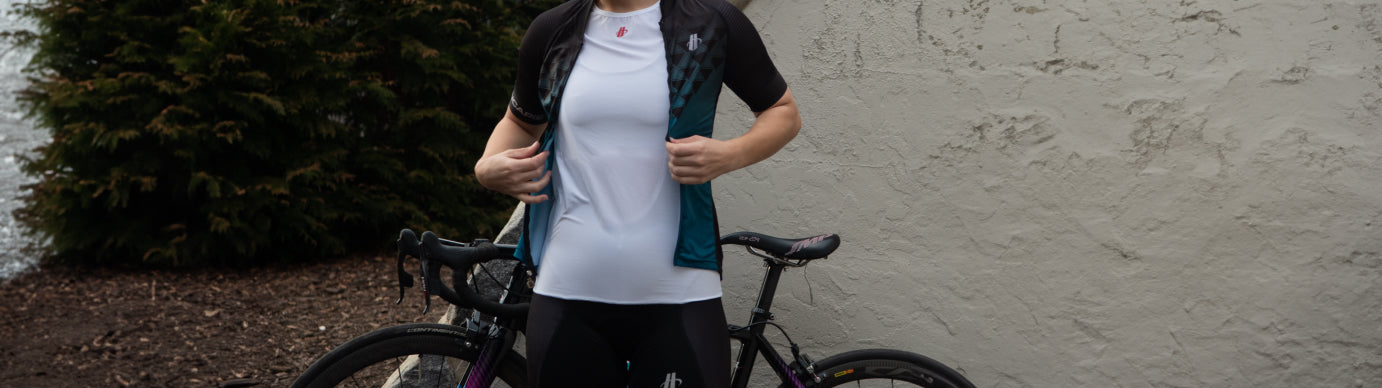
The Hincapie Velocity Short Sleeve Jersey is built for exactly these conditions. The soft stretch fabric provides a comfortable race fit, and the full-zip front lets you control airflow on climbs and descents. It’s the kind of jersey that works on a midweek training ride and a Saturday century alike—designed and manufactured in our Medellín factory.
Shop Women's Cycling Jerseys →
Bib shorts and chamois that manage moisture

Heat makes chafing worse, so a quality chamois and proper fit matter even more in summer than in cooler weather. Lightweight bib fabrics with breathable mesh straps help regulate temperature throughout your ride, and bibs are generally preferable to waistband shorts in heat—no elastic digging into your midsection, no waist bunching trapping warmth.
The Hincapie Men’s Firma Bib is purpose-built for hot conditions. It’s our most minimal, lightweight bib—with seamless clean lines, compressive fabric with UPF 50+ protection, and a century chamois rated for six to eight hours. The mesh upper wicks moisture like a base layer, so there’s no additional layer trapping heat against your torso. It’s the bib our riders reach for when conditions are at their most demanding.
A summer base layer
This seems counterintuitive at first. Why add another layer when it’s hot? A lightweight mesh base layer actually helps your body’s cooling system by wicking sweat off your skin and allowing the jersey to do its job. Without one, sweat saturates the jersey directly and reduces evaporation efficiency.
The key is choosing a base layer designed specifically for heat. Hincapie’s Sleeveless Baselayer helps move moisture fast and prevent overheating. It’s thin enough that you barely feel it, but it makes a measurable difference in how dry and cool you stay over two, three, four hours in the heat.
Breathable socks, shoes, and gloves
Thin, synthetic cycling socks allow better breathability than thick cushioned options. Ventilated shoes matter because feet swell in heat—if your shoes feel snug on a 70°F day, they’ll feel tight by mile 30 on a 95°F day. White or light-colored shoes reflect heat rather than absorbing it. Fingerless gloves provide grip without overheating your hands.
Learn more: Complete Guide to Cycling Socks →
Cycling caps are more useful than you may think
Newer riders sometimes skip the cap, figuring the helmet provides enough coverage. It doesn’t—at least not for everything a cap handles.
A lightweight cycling cap under your helmet keeps sweat from running into your eyes, provides an extra layer of sun protection on your scalp and forehead through ventilation ports, and, in a light color, reflects solar radiation instead of letting your helmet absorb it. The brim channels sweat to the sides of your face rather than straight down. It’s a small piece of kit that solves an outsized problem on hot rides.
Arm sleeves and UV protection layers
On long rides in direct sun, dedicated UV arm sleeves can be a better solution than sunscreen alone. They don’t wash off with sweat, they provide consistent UPF coverage for hours, and many offer a slight cooling effect when wet—sweat wicks through the fabric and evaporates on the surface, working with your body’s cooling system.
Sleeves make the most sense on rides over two hours, on high UV-index days, or for riders prone to sunburn. They’re easy to push down or remove mid-ride and stash in a pocket if conditions change. Some riders pair them with a short-sleeve jersey as their default summer setup—sun protection without the extra torso coverage of a long-sleeve jersey.
Fabric matters: what makes hot-weather cycling apparel work
Not all cycling jerseys and bibs are built the same, and the difference becomes obvious in heat. Understanding what makes summer-specific fabrics perform helps you make better kit decisions—whether you’re shopping retail or specifying materials for a custom team order.
Moisture-wicking vs. moisture-absorbing: know the difference
Cotton absorbs moisture and holds it. That’s why a cotton t-shirt gets heavy, clingy, and uncomfortable within the first few miles on a hot day. It pulls sweat off your skin but keeps it trapped in the fabric, which stops the evaporation cycle and leaves you feeling hotter.
Technical cycling fabrics wick moisture—pulling sweat to the outer surface where airflow can evaporate it. The fabric stays lighter, your skin stays drier, and your body’s cooling system keeps functioning the way it’s supposed to. This is the fundamental reason cycling-specific apparel exists for summer riding, and it’s why the difference between a purpose-built jersey and a regular shirt becomes dramatic above 80°F.
Mesh, ventilation panels, and airflow design
Where a jersey places its mesh panels matters as much as the mesh itself. Strategic ventilation under the arms, along the sides, and across the upper back takes advantage of the airflow you generate while riding. These are the areas where heat builds fastest and where moving air can do the most work.
Well-designed summer jerseys use different fabrics in different zones—denser, more structured fabric on the front and shoulders for durability and UV protection, lighter mesh on the sides and back for maximum airflow. This kind of panel engineering comes from testing in real riding conditions, not lab specs. Hincapie controls this process in our own factory in Medellín, where every panel placement is refined through actual ride testing in conditions that range from high-altitude cool to lowland tropical heat.
UPF ratings and sun-protective fabrics
UPF (Ultraviolet Protection Factor) measures how much UV radiation a fabric blocks. A UPF 50+ rating means less than 2% of UV rays pass through—effectively eliminating the need for sunscreen on covered areas.
Denser fabrics generally offer better UV protection, but modern engineering can achieve high UPF with lightweight, breathable construction. When you design and produce the fabric in-house, you can optimize the weave for UV protection without sacrificing the airflow riders need in heat. It’s a balance that off-the-shelf fabrics don’t always get right.
These fabric and construction features aren’t limited to Hincapie’s retail collection—they’re available in our custom program with no order minimums. If you’re building team kits for summer riding, the fabric choices matter. Get a custom quote →
Hydration strategy for hot-weather rides
Hydration is the most critical factor for safe summer cycling. By the time you feel thirsty, you’re already behind on fluid intake.
Pre-ride hydration: start before you clip in
Hydration starts hours before the ride. Drink consistently throughout the morning—not a big chug right before you head out. A general guideline is roughly 6 mL of fluid per kg of body weight in the hours leading up to a ride. Pre-loading with electrolytes the night before and morning of a long, hot ride is a habit that pro riders build their routines around, and weekend riders should adopt.
On-the-bike hydration: how much and how often
Aim to drink every 15–20 minutes rather than waiting until you feel thirsty. Two bottles per hour is a reasonable baseline in heat, though some riders need more depending on sweat rate and conditions. For rides longer than 90 minutes in hot weather, plan your route around water refill points. Running out of water on a hot day isn’t a minor inconvenience—it’s a genuine safety issue.
Electrolytes: why water alone isn’t enough
Sweat contains sodium, potassium, magnesium, and chloride. Replacing water without electrolytes dilutes what’s left in your system, which can lead to problems on longer efforts—including hyponatremia in extreme cases. For rides over an hour in heat, electrolyte drink mixes or tablets help maintain the balance your body needs to keep functioning.
Cooling from the outside: water on skin, ice in bottles
Pro riders pour water over their heads and down their jerseys for a reason—external cooling works. A wet base layer under a jersey significantly increases evaporative cooling. Ice in bottles, or frozen bottles that thaw during the ride, keeps core temperature down through cold fluid intake. These are simple tactics that make a real difference above 90°F, and they cost nothing.
Sun protection beyond sunscreen
Sunburn is cumulative damage, and cyclists accumulate a lot of UV exposure over a season. A comprehensive approach combines sunscreen, apparel choices, timing, and eyewear—not just one in isolation.
Sunscreen for cyclists: application tips that actually work
Apply sunscreen 20–30 minutes before your ride so it absorbs properly. Most riders know this, but still rush the application while standing in the driveway.
Use a sport or sweat-resistant formula—standard sunscreen breaks down fast under sustained sweating. Cover the obvious areas, but don’t forget the spots that burn you once and you never forget: the backs of your ears, the triangle at the back of your neck above your jersey collar, the tops of your feet where shoes vent, and the thin strips of skin at your glove line and sock line.
Spray sunscreen is worth carrying on rides over two hours for reapplication. One tip from years of long rides in the Carolina heat: if your sunscreen stings your eyes when mixed with sweat, a cycling cap or moisture-wicking headband channeling sweat to the sides of your face helps more than switching brands.
Cycling sunglasses: UV protection and performance
Sunglasses are not optional in summer. UV damage to your eyes is cumulative and irreversible, and cyclists spend hours in bright, reflective environments with no natural shade.
Look for lenses with UV400 or 100% UV protection—this blocks both UVA and UVB rays. Wrap-around frames provide better coverage from peripheral light and wind. Ventilated lenses or airflow channels reduce fogging, which becomes a real issue when you’re generating heat and sweat. Photochromic lenses that adjust to changing light are useful for rides that start early and stretch into midday.
Beyond UV, sunglasses protect your eyes from road debris, insects, and wind-driven sweat—all of which become more frequent in summer.
Helmet ventilation and head cooling
Your helmet choice matters more in heat than most riders realize. Well-ventilated helmets with large intake and exhaust ports move significantly more air over your head than budget models with fewer or smaller vents. Since your head is a major heat-loss zone, the difference in comfort over a long summer ride is substantial.
White or light-colored helmets reflect more solar radiation than dark ones. Combined with a light-colored cycling cap underneath, you’re managing heat from two angles—reflective outer surface and moisture-wicking inner layer.
Nutrition and fueling adjustments for heat
Heat changes how your body processes food on the bike. The same fueling strategy that works on a 70°F morning can leave you nauseous and bonking on a 95°F afternoon if you don't adapt.
Why heat kills your appetite (and why you need to eat anyway)
When your body diverts blood to the skin for cooling, less goes to your digestive system. Digestion slows, appetite drops, and food that normally sits fine in your stomach can feel heavy or nauseating.
The problem is that your caloric needs on a hot ride are just as high—sometimes higher—as on a cooler one. Your body is burning fuel to ride and to cool itself. Skipping food because you don’t feel hungry leads to bonking, and bonking in heat is a faster path to trouble than bonking on a cool day because your body has fewer reserves to draw from. Eat on a schedule, not by feel.
Best foods for hot-weather rides
Opt for easily digestible, high-moisture foods. Gels, fruit—bananas, watermelon, oranges—rice cakes, and applesauce pouches all go down easier than dense bars when your gut is under heat stress. Liquid calories from carbohydrate drink mixes serve double duty as fuel and hydration. On the hottest days, this can be your primary fueling source.
Salted foods help replace sodium lost through sweat. A small bag of pretzels, salted rice cakes, or a few pinches of salt added to your food can make a noticeable difference on rides over two hours. These are the kind of small adjustments you pick up from years of long summer rides.
Smart ride planning for hot days
Timing your ride around peak heat is the simplest way to stay safe and comfortable. The difference between riding at 7 AM and 2 PM can be 15–20 degrees.
Early morning rides before the heat peaks
Early morning, before 10 AM, is the primary window. Temperatures are typically lowest at dawn, and road surfaces are also cooler, reducing radiant heat from the pavement. If you can get your miles in before the sun is high, you'll have a much better experience.
Evening rides after temperatures drop
Late evening offers relief, though pavement radiates stored heat even after the air temperature drops. Evening rides can feel hotter at ground level than the thermometer suggests because asphalt releases the heat it absorbed during the day.
If you're riding into dusk, bring visibility gear for fading light.
Learn more: Tips for Safe Cycling at Night
Route selection: shade, water, and bail-out options
Where you ride matters as much as when. A shaded greenway or tree-lined back road can feel ten degrees cooler than an exposed highway shoulder at the same time of day.
Plan loops instead of out-and-backs whenever possible. On a loop, you’re never at maximum distance from home when conditions are at their worst. Know where water refill points are—convenience stores, parks with fountains, friendly cafes. On rides longer than 90 minutes in serious heat, running out of water is a real risk.
Have a bail-out option for every ride. A shorter route home, a pickup point, or a shaded rest stop where you can wait out the worst heat. The riders who log the most summer miles are the ones who plan for the conditions, not the ones who tough it out until something goes wrong.
Pacing in the heat: why your power zones lie to you
Heart rate drifts upward in heat even at the same power output. Your usual zone 2 at 70°F is not your zone 2 at 95°F. Riders who train by power should still back off intensity—your body is working harder to cool itself, leaving less capacity for performance.
Start slower than you think you need to, back off on climbs, and embrace the reality that hot weather riding requires ego management. You won’t hit your normal numbers, and that’s fine. The goal is consistent, sustainable effort that leaves you finishing strong instead of crawling home.
Heat acclimatization: how to train your body for summer
Your body adapts to heat with gradual, consistent exposure. Heat acclimatization leads to earlier and more efficient sweating, increased blood plasma volume, lower resting heart rate in heat, and better cardiovascular efficiency. It’s something the pros do before hot races—and it works for everyone.
What heat acclimatization means (and how long it takes)
It typically takes 10–14 days of consecutive heat exposure to achieve meaningful acclimatization. The first few hot rides of the season feel harder than they should. That’s normal—your body hasn’t adapted yet. By the end of two weeks of regular riding in warm conditions, most riders notice a real difference in how they feel and perform.
Practical acclimatization tips for everyday riders
Start with shorter, easier rides in warm conditions and gradually extend duration and intensity over one to two weeks. Don’t jump straight into a long, hard ride on the first hot day of the season. Sauna exposure can supplement on-bike acclimatization if outdoor riding isn’t practical.
Riders who’ve been riding through a warming spring are already partially acclimatized—the key is consistency. Regular heat exposure, not occasional suffering.
Special conditions and considerations
Heat doesn’t show up the same way everywhere. The strategies that work in dry desert climates need adjustment for the Southeast, and event-day heat management is its own discipline.
Riding in high humidity vs. dry heat
In dry heat, sweat evaporates efficiently. Your cooling system works, but dehydration sneaks up because you don’t feel as wet—the sweat disappears before you realize how much fluid you’re losing. Hydration discipline is critical. Drink on schedule, not by thirst.
In humid heat, sweat can’t evaporate efficiently because the air is already saturated. Your body keeps producing sweat, but it pools on your skin and soaks your kit without actually cooling you. Core temperature rises faster, fatigue sets in sooner, and the risk of heat illness is higher at lower absolute temperatures. Riders in the Southeast and Gulf Coast deal with this from May through September.
Clothing choices differ between the two. In dry heat, the standard summer kit handles most conditions. In humidity, mesh panels and maximum airflow become even more critical—you need every possible advantage to move air across your skin and assist the evaporation that humidity is working against.
Gran Fondo and event-day heat strategy
Event-day heat management starts the day before. Pre-hydrate with electrolytes the evening before and the morning of. Lay out your lightest kit. Apply sunscreen at home, not in the parking lot when you’re rushed.
During the event, use aid stations aggressively. Fill both bottles even if one is still half full—you don’t know how far the next station is, and in heat, your consumption rate is higher than you expect. Pour water over your head and the back of your neck at every opportunity. If ice is available, take it.
Know the signs of trouble and do not push through them. A Gran Fondo is a celebration of riding—the goal is to finish strong, not just finish. Pulling into an aid station to cool down for ten minutes is not a failure. It’s what experienced riders do. If you’re preparing for Gran Fondo Hincapie in the Carolina heat, these habits are the difference between a great day on the bike and a miserable one.
Sign up for the Gran Fondo Hincapie, Greenville, SC
Custom team kits for summer: design for the conditions
If you’re ordering custom kits for your club, team, or organization, summer conditions should inform your fabric and design choices from the start. The same design printed on a heavyweight winter fabric and a lightweight summer mesh will perform very differently when temperatures climb.
Light-colored base fabrics reflect more heat. Mesh side panels and underarm ventilation zones increase airflow. UPF-rated fabrics reduce the need for sunscreen on covered areas. These aren’t just features available in our retail collections—they’re options in Hincapie’s custom program, with no order minimums.
If you’re thinking about a summer custom order, keep lead times in mind. Ordering in spring means your team has purpose-built summer kit ready when the heat arrives, not halfway through the season.
Ride smart, ride prepared
Heat is a condition, not a barrier. The best riders in the world race through 90°F+ stages in July—they don’t avoid the heat, they prepare for it. The right kit, a solid hydration plan, smart ride timing, and the willingness to adjust your effort when conditions demand it are all it takes to keep riding well through the hottest months of the year.
Hincapie builds the apparel that professional teams trust in the most demanding conditions—and every piece of that engineering is available to you, whether you’re shopping for your own summer kit or outfitting your entire team.
FAQs about cycling in hot weather
Is it safe to cycle in 90 degree weather?
Yes, with proper precautions. Hydration, appropriate clothing, adjusted effort, and awareness of heat illness symptoms all contribute to safe riding in high temperatures. Experienced riders handle 90-degree weather regularly with preparation.
Why do I feel weaker when cycling in hot weather?
Your cardiovascular system works overtime to cool your body, leaving less capacity for powering your legs. This is normal physiology, so adjust your expectations accordingly.
How long does it take to acclimate to cycling in heat?
Most riders adapt within 10–14 days of regular heat exposure, with noticeable improvement after the first week of consistent summer riding.
What should I wear for cycling in 90-degree weather?
A lightweight, moisture-wicking cycling jersey with mesh ventilation panels, breathable bib shorts with a quality chamois, thin synthetic socks, and ventilated shoes. A mesh base layer helps your body’s cooling system work more efficiently. Add a cycling cap under your helmet for sweat management and sun protection, and sunglasses with UV400 protection. Choose light colors to reflect heat.
Do I need a base layer in summer?
A lightweight mesh base layer helps keep you cooler by wicking sweat off your skin and allowing your jersey to manage moisture more effectively. The key is choosing one designed for heat—not repurposing a cold-weather layer.
How do I prevent chafing when cycling in hot weather?
Start with properly fitting bib shorts and a quality chamois—this is the single biggest factor. Apply chamois cream before the ride. Avoid cotton, which holds moisture against the skin. A mesh base layer reduces friction between your skin and jersey. On rides over two hours, reapplication of chamois cream at a stop can prevent problems in the second half.