




















It may seem silly for cyclists to make a big deal out of a good pair of bike socks, but we’ve learned from experience. Those of us who’ve thrown on cotton socks without a second thought know all too well that we couldn’t stop thinking about them during the ride–and not happy thoughts. Comfort affects your performance while cycling. Slipping, sweaty, or lumpy socks can keep you from cycling your best and enjoying the ride. Not to mention, your feet do a lot of work to keep your bike moving, so they deserve to be treated well. So, here are all the details about cycling socks you never knew you needed.
What are cycling socks?
Cycling socks are light, thin, and well-ventilated so that they fit snugly between your feet and cycling shoes while allowing your feet to breathe. They’re made from synthetic or natural performance materials, like lycra, polyester, or merino wool, that keep your feet dry and regulate your body temperature. Cycling socks fit your feet like a second skin that protects them from your shoes, dirt, rain, and cold. Just like the chamois in your bike shorts, bike socks provide comfort without creating painful pressure points.
How do cycling socks differ from other socks?
Cycling socks are thin and snug, but most other sports socks are cushioned to absorb shock on impact. Because your feet never hit the ground while cycling, extra cushion is not necessary. Cycling shoes should be stiff and snug for efficient pedaling, so it’s important that socks integrate with bike shoes and don’t compromise the fit with protrusive seams and padding.
Bike socks are made from synthetic materials and merino wool rather than cotton. These materials are thin, lightweight, and extra soft. Most cycling shoes are also less ventilated than running shoes, which makes good ventilation in bike socks all the more important. Unlike socks made of cotton, merino wool is naturally antimicrobial, and synthetic fabrics can have antimicrobial fibers woven in so your cycling socks will stay smelling fresh.
What to look for in cycling socks
1. Moisture-wicking material
Moisture-wicking materials used for cycling socks (polyester, Lycra, and merino wool) prevent water and sweat from soaking your feet. Moisture-wicking is crucial when cycling in rain, snow, or heat for long distances. So cotton socks are out. They would soak in moisture and leave your feet soggy, cold, and smelly. By keeping your feet dry, moisture-wicking materials help regulate your body temperature and prevent your socks from slipping around or bunching down and making you uncomfortable.
2. Thickness
Cycling socks should be thin because they must fit comfortably into your well-fitted cycling shoes. Don’t stuff thick socks into your cycling shoes, and don’t buy larger cycling shoes to fit thicker socks into. If your feet hurt while riding, you probably don’t need extra cushioning, but better-fitting cycling shoes. And if your feet need additional warmth, you don’t need thicker socks, but a pair of cycling shoe covers instead.
3. Fit
After putting your bike socks on, they should conform to your foot shape so well that you shouldn’t think about them again until you take them off. Synthetic fibers can be woven tightly, achieving a higher thread count and producing more fitted socks that are great at keeping dirt out. A good pair of cycling socks should not have thick seamlines that create pressure points and rub painful sores, but they should be double-cuffed so they don’t slip down. Loose socks make for a miserable ride. At the same time, your socks shouldn’t be so tight that they cut off your circulation.
4. Style
In the world of professional cycling, discussion on the style of cycling socks usually revolves around color and length–white versus black and short versus long cuffs. White 3” socks are the classic choice, popularized by earlier cycling fashion icons like like Eddy Merckx and Fausto Coppi. But over the last two decades (ever since Lance Armstrong sported tall, black socks), the trend has changed. Now, it’s common to see taller, darker cycling socks. If you aren’t a professional cyclist, choose whatever length or color you please. Currently, taller socks look more professional, but trends come and go. Ultimately, wear what makes you comfortable and helps you perform your best.
Cycling sock length
Finding the right length of cycling socks is usually more challenging than finding the right size. Generally, socks are sized XS, S, M, L, and XL according to the manufacturer’s size chart, while sock length is measured by the height of the cuff in inches or centimeters.
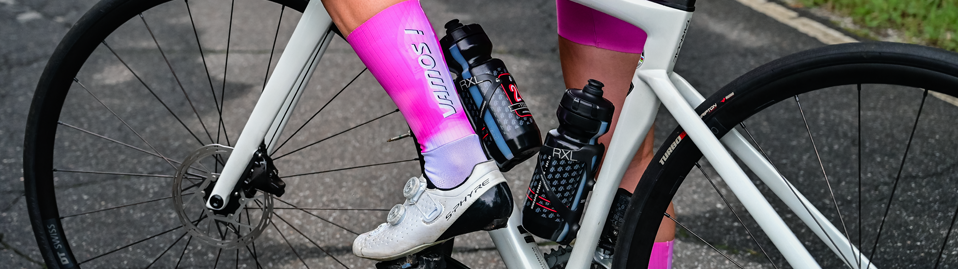
For professional racing, the Union Cycliste Internationale (UCI) states that socks reach higher than halfway between your lateral malleolus (at the ankle) and your middle fibula head (at the side of the knee) since taller socks may give an aerodynamic advantage. But for recreational cyclists, the length of your socks is up to you.
Different lengths won’t look the same on every person since calves vary in length, width, and shape. To find the length that works best for you, measure your leg from the ankle to the point you’d like your socks to reach in inches or centimeters. Below are different examples of cycling sock lengths from the Hincapie collection.
7-inch cycling socks

6-inch cycling socks

5-inch cycling socks
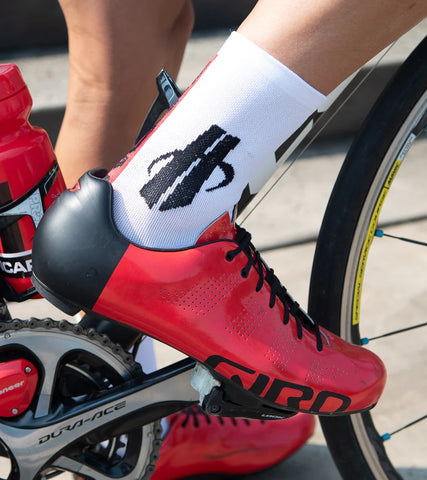
4-inch cycling socks

3-inch cycling socks

The best summer cycling socks
The best summer cycling socks are made from light and breathable materials. Synthetic materials, nylon, micro-nylon, polyester, or lycra are the best choices. Each is soft, durable, and moisture-wicking. In the summer heat, these materials help your feet stay dry and cool.
Hincapie Power Sock 5” Cuff
Our most breathable and lightest cycling socks

Cost: $10
Colors: Black or White
Other lengths: Power Sock in a 3” cuff
Hincapie Logo Sock
Our ultra-thin, barely-there summer staple socks

Cost: $10
Colors: Blue, Black, Green, Neon Yellow, or Red
The best winter cycling socks
Cycling socks made from merino wool are the best choice for your cold-weather cycling wardrobe. It’s a great insulator but also light and soft, making it a perfect fit for cycling shoes. The wool’s fiber traps incoming air and blocks the chill before it reaches your feet, and it regulates your body temperature by absorbing and then evaporating moisture. The lanolin in merino wool acts as a bacteria repellent, so socks made from it won’t have a stench after a ride. It’s such a great winter performance material, that we also use merino wool in cycling baselayers and gloves.
Hincapie Power Merino Wool 6” Cuff Socks
Our super soft and warm winter cycling socks
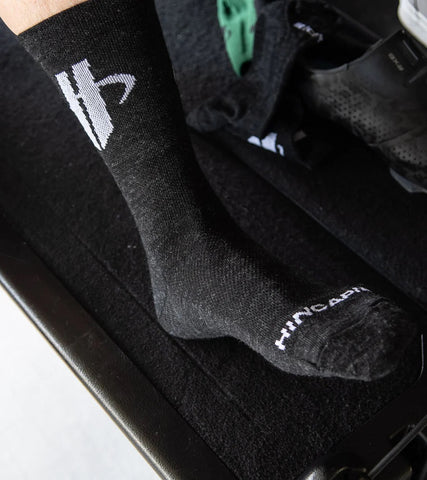
Cost: $17
Colors: Charcoal
Other lengths: Power Merino Wool Sock in a 4” Cuff
Hincapie Power Midweight Sock 7” Cuff
Our favorite thermal for fall, winter, or spring

Cost: $15
Colors: Black or Grey
Shop all of the Hincapie men’s cycling socks or women’s cycling socks.
Cycling socks do no good without a great pair of cycling shoes. Choose from our top 10 picks for the best cycling shoes, or learn how to size and style your cycling shoes. Or, find other recommendations for your cycling kit essentials.

