

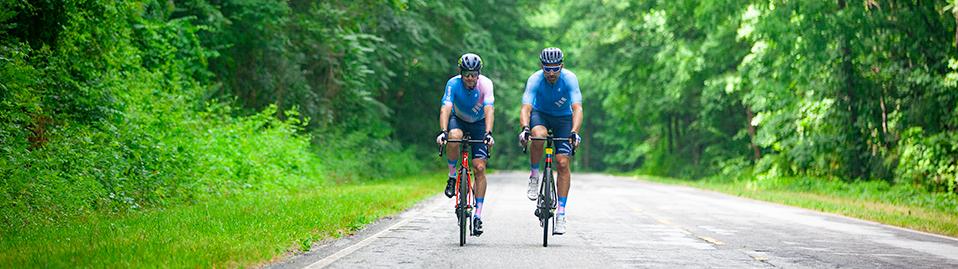
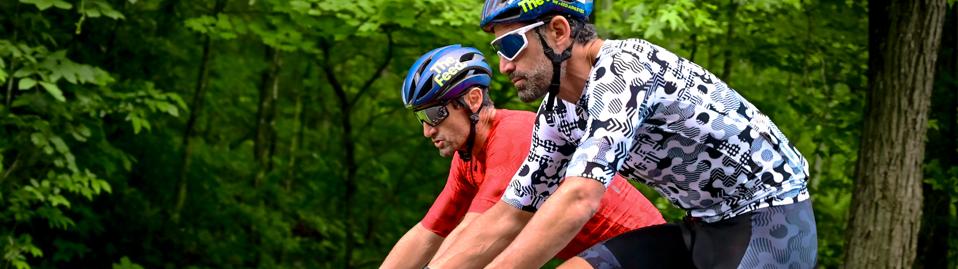
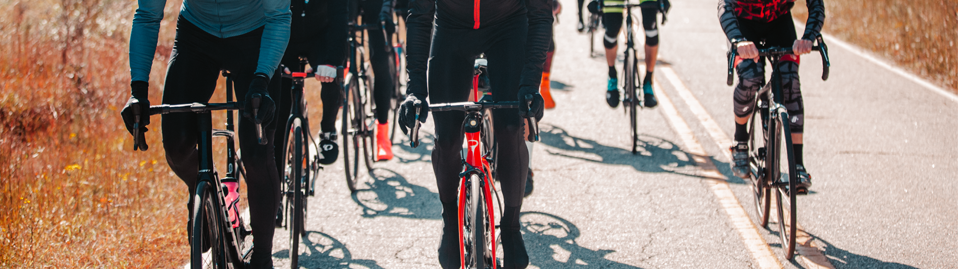


You've been handed the job of organizing your club's custom cycling kit. Everyone has opinions about colors, logos, and fit—but nobody wants to run the project. The best custom kit orders come together when one person knows the process and keeps things moving.
This guide walks through the full process: defining what your club actually needs, managing group decisions, working with a designer, handling sizing across your roster, and getting the order placed on time for your season.
Start with what you actually need, not what looks cool
A custom cycling kit is a coordinated set of cycling apparel—jerseys, bib shorts, jackets, and accessories—designed with your club's colors, logos, and branding. Before anyone opens a design tool, the person organizing the order has a few practical questions to answer first.
What discipline does your club primarily ride? Road, gravel, and mixed terrain each call for different fabric weights and construction. What climate will the kit cover? Hot summers, cold winters, or year-round mild conditions affect which pieces you actually need. And finally, which pieces does the team want—jersey only, full kit with bibs, or layering options like vests and arm warmers?
Once you've answered those questions, you can narrow down your options. Most custom apparel partners organize their offerings by collection—road performance, club fit, gravel, all-conditions, and so on. Starting with the right collection makes every decision after that easier.
How to get everyone on the same page without a committee
This is the step most club kit projects skip—and where many of them hit a wall. Designing a kit by full consensus usually ends with something nobody loves.
- Set a hard deadline for collecting input. Open-ended timelines lead to open-ended debates.
- Limit color votes to two or three options rather than asking for open-ended suggestions.
- Assign one decision-maker with final veto power. Ideally, someone with a clear sense of the club's identity and a willingness to make a call.
One person owning the final decision keeps the process moving. You can still gather feedback, but someone has to be willing to say "this is what we're going with."
What a custom cycling kit includes
A custom kit can range from a jersey-only order to a full head-to-toe collection. Here's what each component does.
Jersey
The jersey is the most visible piece of any custom kit. Short sleeve and long sleeve options are available, and jerseys typically feature the most prominent club branding and sponsor placement. This is where your club's identity shows up on group rides and at events.
Bib shorts
Bib shorts use shoulder straps to hold the shorts in place and eliminate waistband pressure. The chamois—the padded insert—is the key comfort feature for long rides. A quality chamois makes a noticeable difference on anything over an hour in the saddle.
How to Buy Bike Shorts: Sizing, Fit, and Style Guide →
Vest and jacket
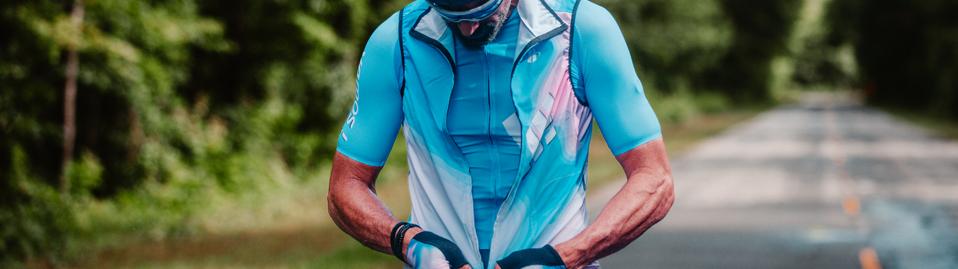
Custom cycling jackets and vests are often overlooked when ordering team apparel. A vest or jacket extends the usability of your kit into cooler conditions and provides another branding opportunity. If your club rides year-round, you'll get a lot of use out of them.
Base layers and arm warmers
Base layers and arm warmers let riders adapt to changing temperatures mid-ride. They can be customized with club branding or ordered in neutral colors to pair with branded jerseys.
Caps, socks, and gloves
Caps, socks, and gloves complete a cohesive look on group rides and at events. They're often popular add-ons for club members who want the full kit experience.
What to spec out and what your apparel partner handles
You don't have to figure out everything yourself. Here's how the work typically divides:
|
What you decide |
What your partner handles |
|
Collection and style |
Design execution |
|
Primary colors |
Fabric selection guidance |
|
Logo files |
Fit options and sizing support |
Many custom apparel partners offer home try-on programs where sample garments ship to members before the order is placed. This is especially useful for clubs with members spread across different cities.
Explore Hincapie Custom Cycling Apparel →
How to design a custom cycling kit your club will wear
Design decisions work best when they're practical, not just aesthetic.
Anchor the design in club identity
Start with your club's existing colors and logo. Avoid introducing too many new elements. Consistency builds recognition over time—riders will start to recognize your kit on the road.
Choose colors that stay visible on the road
Bright or high-contrast colors improve safety. Darker kits can look sharp, but they work better when paired with reflective elements or accent colors that catch drivers' attention.
Balance sponsor logos with a clean layout
Too many logos create visual clutter. Prioritize placement hierarchy: club logo most prominent, sponsors secondary. Work with your designer to maintain breathing room in the layout.
Get team buy-in before you approve artwork
Share mockups with club members before finalizing. Gathering feedback early prevents complaints after delivery. Most custom apparel partners offer revision rounds—use them.
The timeline: plan around your season
A 4–6 week post-artwork-approval production turnaround means planning matters. Work backward from your target event or ride date.
- Spring racing season: Start the process by late winter.
- Gran Fondo season: Begin no later than early spring.
- Fall club rides or events: Summer is the time to start.
Building in buffer time for design revisions and sizing is the simplest way to avoid a rushed order.
Steps to build a custom club kit from concept to delivery
Step 1: Define your riding conditions and use cases
Consider what your club rides most—road, gravel, or mixed terrain. Think about climate: hot summers, cold winters, or year-round mild conditions. This determines which pieces and fabrics you need.
Step 2: Choose your kit components and collection
Decide which pieces to include in the order. Most clubs start with jerseys and bib shorts, then add layers in subsequent orders.
Step 3: Work with a designer on artwork
Provide logos, colors, and direction to begin designing your custom jersey. The design team creates mockups, and multiple revision rounds before approval are normal.
Step 4: Distribute sizing kits to the team
Home try-on programs let members try on sample garments before ordering. This is especially useful for clubs with members in different cities.
Step 5: Place the group order
Collect sizes and payment from members, then submit the consolidated order.
Step 6: Plan for production and delivery
Standard production is typically 4–6 weeks after artwork approval. Confirm whether everything ships to one address or directly to individual members.
How to size a custom cycling kit across a club
Sizing is one of the biggest challenges in club kit orders.
Use the home try-on program for remote members
Sample garments can be shipped to members who can't try them on in person. They try on garments at home and return them before placing the order.
Match fit profile to riding style
- Pro fit: Ultralightweight fabric, form-fitting with pro-grip sleeves, best for competitive riding.
- Race fit: Tight, minimal fabric movement, best for fast group rides and racing.
- Club fit: More relaxed cut, comfortable across body types, suits recreational and endurance riding.
Choosing one fit approach for the whole club maintains a consistent look.
Build a size buffer for new riders
Order a few extra pieces in common sizes for new members who join after the main order. This helps avoid waiting for the next production cycle.
How to choose fabrics and fit for your riding conditions
Fabric choice affects comfort and usability. Match fabrics to your club's primary riding season.
Hot weather fabrics for summer riding
Lightweight, breathable, moisture-wicking materials keep riders cool. Mesh panels provide ventilation on climbs, and UV protection matters for long rides in direct sun.
Thermal and wind-blocking options for cold months
Heavier fabrics with brushed interiors retain warmth. Wind-blocking chest panels help on cold descents.
Race fit versus club fit
Race fit reduces drag at speed. Club fit prioritizes all-day comfort. Understanding how a cycling jersey should fit helps your club make the right choice.
How to place sponsor logos and club branding
Common placement zones include chest, sleeves, back pockets, and side panels. Keep the most important branding—usually the club name or logo—in the most visible location.
- Center chest: Primary club logo
- Sleeves: Secondary sponsors or accent graphics
- Back pockets: Sponsor logos or club name
- Side panels: Additional sponsors if needed
Cluttered designs look busy on the road. Less is often more.
Minimum orders, lead times, and reorders
Minimum order requirements
Some partners require minimum quantities. Hincapie Custom has no minimum order requirements, so clubs of any size can place an order.
Typical production timelines
Standard production is typically 6 weeks after artwork approval.
Reorders for new members and replacements
Artwork is stored on file, making reorders straightforward without a full redesign process.
How to choose a custom cycling apparel partner
Manufacturing control and quality
Vertically integrated manufacturers—those that own their own factories—often deliver more consistent quality and faster turnaround than those that outsource production.
Fabric range and discipline coverage
Look for partners that offer collections for road, gravel, triathlon, mountain bike, and different climates.
Design support and revisions
Ask whether design services are included or cost extra. Confirm how many revision rounds are included before approval.
Communication and customer service
Responsive communication matters, especially when coordinating a group order. Dedicated account support is better than generic customer service queues.
What a custom cycling kit costs
The cost of a custom cycling kit depends on the number of pieces, fabric tier, and order quantity. Higher-end technical fabrics and smaller orders usually cost more per piece.
- Number of pieces: Full kits cost more than jersey-only orders.
- Fabric tier: Premium technical fabrics increase cost.
- Order quantity: Larger orders often reduce per-piece pricing.
- Design complexity: Standard templates may cost less than fully custom artwork.
Investing in quality and proper kit care means the kit lasts longer and riders are more likely to wear it.
Build your club kit with Hincapie Custom
Hincapie has built kits for clubs, collegiate and pro teams, charity rides, and corporate groups of every size. With no minimum order, free design services, and factory ownership in Medellín for quality control, the process is built to support clubs at any scale.
Connect with an Expert | Explore Hincapie Custom
Frequently asked questions about custom cycling kits
Can I order just one custom cycling jersey?
Yes. Hincapie Custom has no minimum order requirements, so a single piece can be ordered if needed.
How long does a custom cycling kit take to produce?
Production typically takes 4-6 weeks after artwork approval, order quantities, and payment. Though timelines vary by season, 6 weeks in peak season (May - September), closer to 4 weeks in off-season (Oct - April).
Can I mix men's and women's fits in the same club order?
Yes. Most custom cycling apparel partners allow men's and women's sizing to be combined within a single group order.
Does Hincapie offer custom gravel and triathlon kits?
Yes. Hincapie Custom includes collections for road, gravel, mountain bike, and triathlon, each tailored to the demands of that discipline.
Can we reorder kits later for new club members?
Yes. Artwork is stored on file, making reorders straightforward without a full redesign process.
How do I handle sizing for riders who live in different cities?
Request access to a home try-on program so remote members can try on sample garments at home before placing their order.